Wen Brovold | October 27, 2026
Twenty-five years ago, Fargo-Moorhead Pride was a picnic in Gooseberry Park in Moorhead, Minnesota. I was among those organizing to bring people together, which meant more than simply getting the word out. We were asking LGBTQ people to gather openly in a public park, in a community where being visibly queer could carry serious consequences.
People were afraid to be seen. Afraid of being recognized by coworkers, neighbors, or family members. Afraid of harassment or what might happen afterward. Those fears weren’t unfounded. Gathering publicly required a level of courage that can be easy to overlook today.
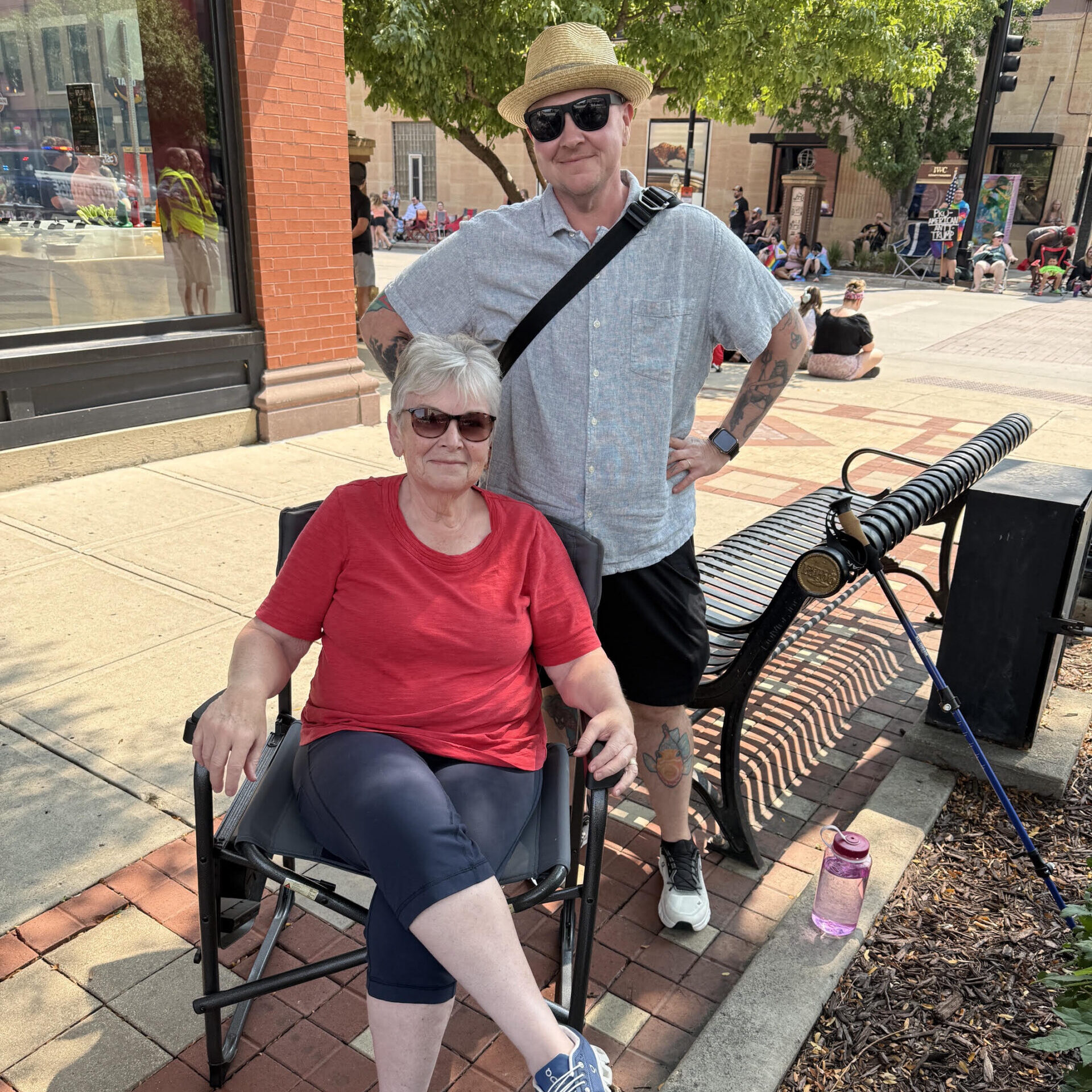
This August, I returned to Fargo-Moorhead Pride for the first time since moving away in 2003.
My mom came with me.
What struck me most were the people. So many people lining the streets, cheering, celebrating, and showing up for a community that, 25 years earlier, had been afraid to gather publicly. I found myself trying to reconcile what I was seeing with the Fargo-Moorhead I remembered.
Then there were the churches and foster care agencies participating in the parade. In the early 2000s, we were still fighting to have our families recognized as families. I helped organize protests calling on the YMCA to be inclusive of LGBTQ parents and their children, at a time when people openly argued that gay people shouldn’t be raising kids at all.
And here, 25 years later, were institutions publicly celebrating the very community whose right to have families had once been so fiercely contested.
It was extraordinary to witness.
When Visibility Came at a Cost
I grew up visibly queer in North Dakota and came out at 14 in the early 1990s. Being queer in a place like Fargo wasn’t simply about navigating your own identity. It meant living in a community where other people often felt entitled to debate your humanity, your relationships, and whether you deserved the same opportunities as everyone else.
There were certainly people who supported us. But the prevailing public conversation was often hostile, shaped by religious condemnation, misinformation about HIV/AIDS, and the belief that LGBTQ people were a threat to families and communities.
In 2002, when Fred Phelps and his followers brought their anti-LGBTQ protests to the area, I helped organize a counterprotest. Their presence was an especially visible expression of attitudes we encountered in less dramatic ways every day.
For those of us involved in organizing, the hostility could become intensely personal.
I was regularly targeted by conservative talk radio. People wrote letters to the newspaper calling for my death. At one point, someone hand-delivered a death threat to my home.
The pressure to stop speaking out didn’t come exclusively from people who opposed LGBTQ rights. Other queer people also urged me to stop drawing attention to our community. Their fear was understandable. Visibility carried real consequences, and not everyone could afford to take those risks.
I believed things could be better, and I felt a responsibility to challenge the institutions and attitudes that made our lives smaller.
I’m naturally a deeply shy person, much more comfortable working behind the scenes than being the center of attention. Becoming a public face of LGBTQ organizing was never particularly comfortable for me. Looking back, I can appreciate the courage it took while also recognizing what that period demanded of me personally.
The threats, hostility, and constant scrutiny took a significant toll on my mental health. Perhaps the greatest cost was that I spent years denying my own trans identity, unable to face the prospect of making myself vulnerable to that kind of hostility again. I don’t regret the organizing, but I carried its consequences long after I left Fargo.
It’s a reminder that the cost of creating change isn’t always visible, and that supporting the people doing this work matters just as much as supporting the work itself.
What Twenty-Five Years Can Change
The Fargo-Moorhead I experienced this August was not the Fargo-Moorhead I left in 2003. Of course, participating in a parade doesn’t mean discrimination has disappeared. LGBTQ people, particularly transgender people, continue to face hostility and political attacks. Progress is neither universal nor permanent.
But what I witnessed was evidence of something profound: a generation of organizing and advocacy had helped transform how a community sees its LGBTQ neighbors.
And that kind of change doesn’t happen by accident. It happens because people challenge institutions, build relationships, and refuse to accept that things have to stay the way they are.
It also happens because someone invests in that work.
That’s what being a community foundation means to me, and it’s what makes PFund’s role so important.
PFund’s investments aren’t just about meeting immediate needs, although those needs are significant. They’re about recognizing the people and organizations building a different future for their communities, often long before the results are visible.
I received a PFund scholarship while I was organizing in Fargo-Moorhead. A scholarship for a queer organizer in Fargo might seem like a small investment. But for the person receiving it, that support can affirm that their work matters and that they aren’t doing it alone.
Today, as a PFund board member and chair of its Advancement Committee, I think about the organizers across the Upper Midwest who are doing difficult, often unrecognized work. I think about the young people trying to build community in places where they don’t yet feel safe.
The changes I witnessed in Fargo-Moorhead didn’t happen because of any one person or organization. They happened because people continued showing up, year after year, even when progress seemed impossible. Over time, their efforts helped reshape what the broader community understood about its LGBTQ neighbors.
That kind of change takes patience, persistence, and resources. It also takes funders who recognize that the most meaningful outcomes may not be apparent for years.
Twenty-five years ago, we were trying to convince people it was safe enough to gather for a picnic in a park. This August, I stood among crowds of people celebrating a community that once feared being seen at all.
And beside me was my mom, smiling the entire time.
I know how much work remains, and how fragile progress can be. But standing there, I was reminded of something we don’t celebrate nearly enough: communities can change. The stories people tell about us can change. And what once seemed unimaginable can become something worth celebrating in the streets.
About the Author
Wen Brovold (they/them) has spent more than 25 years working in nonprofit leadership, communications, and fundraising. A co-founder of the Pride Collective and Community Center in Fargo-Moorhead, Wen currently serves as Communications Director at Groundswell Fund, a public intermediary foundation working at the intersection of bodily autonomy and democracy. A 2003 PFund Scholar, Wen now serves on PFund Foundation’s board and chairs its Advancement Committee. As a trans, queer parent, Wen is committed to building a future where the next generation can live more freely, safely, and authentically.